

How Compound Interest Builds Wealth Over Time Even Starting With Almost Nothing
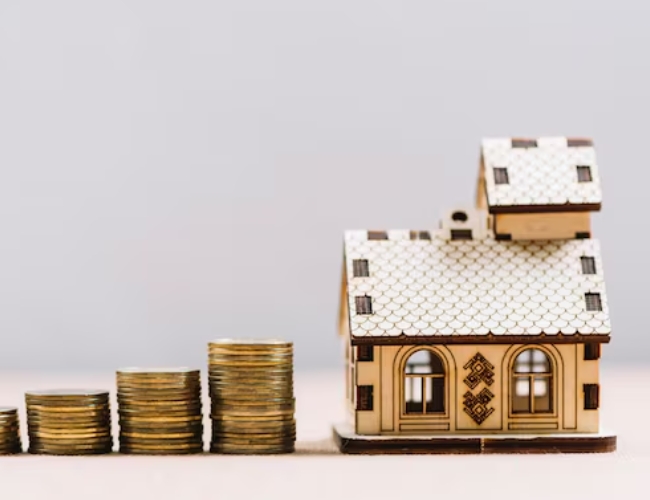
There comes a time, usually in your thirties, when you hear someone say they began investing when they were twenty-two. At that point, a quiet, uneasy kind of math clicks into place. At twenty-two, you weren't doing anything wrong. You simply didn't know that's where the story of compound interest really starts not with numbers, but with time already spent more than almost anything else in personal finance.
In its most basic form, compound interest is simply interest earning interest. The interest for the following period is computed on a larger base after your principal earns a return, which is then incorporated back into the total. After years of repeating that cycle, the growth curve ceases to appear linear and begins to bend upward in an almost unbelievable manner.
After the first year, a thousand dollars invested at a six percent annual return does not simply become $1,060 and remain unchanged. Each year, it increases to $1,060 then $1,124 then $1,191 building on a marginally higher figure than the previous one. By the tenth year, it has surpassed $1,600 without any further deposits. Financial advisors claim that time in the market is more important than timing the market because of the snowball effect.
One of the easier ways to see this without getting bogged down in spreadsheets is to use the Rule of 72. You can estimate how many years it will take for your money to double by dividing 72 by your annual interest rate. That's roughly twelve years at six percent. It's just over seven at ten percent. It sounds straightforward because it is people often underestimate what it truly describes because of its simplicity.
Two hypothetical investors were tracked in a Federal Reserve study: one began at age 25, contributed $5,000 annually for just ten years before stopping completely another began at age 35 and continued to invest $5,000 annually for thirty years. In the end, the earlier investor made more money. More cash, despite only making a third of the same contribution. It's not a rounding error. Compounding does just that over time.
Access to investment products may not be the largest barrier; rather, it may be the persistent belief that you require a substantial initial investment. In the past, that was partially accurate. Small investing used to be unfeasible due to transaction fees and minimums. Most of those barriers have fallen. These days, there are tools like fractional shares, high-yield savings accounts automatic recurring investment plans that actually allow someone to start with a dollar.
This begs the unsettling question: why does it seem that compound growth is still primarily experienced by those who already have money, even though the tools are available? Awareness is part of the solution. A system that still does a poor job of teaching this is part of it, as is trust.
Beyond straightforward savings, reinvestment is where things get interesting. Dividend reinvestment plans, also known as DRIPs, function by automatically purchasing additional shares with any dividend that a stock or exchange-traded fund (ETF) pays out instead of giving out cash.
Dividends from those additional shares are then used to purchase additional shares. The compounding layer on top of the investment growth itself can account for a significant amount of total returns over the course of a decade or two. This mechanism has quietly multiplied gains in some ETFs that hold dividend-paying stocks in ways that would not be apparent if you only looked at price appreciation.
Compounding works in the opposite direction, which is typically overlooked in upbeat articles about accumulating wealth. If a $10,000 loan with ten percent annual compound interest is not repaid, it will grow to almost $26,000 in ten years. Using the Rule of 72, credit card debt at eighteen percent interest doubles in just four years.
You begin to understand why debt can seem so elastic and resistant when you observe this in someone's financial life because, mathematically speaking, it is. The same force that creates savings accounts has the ability to covertly increase balances in ways that surpass nearly all attempts at repayment.
The best time to plant a tree was twenty years ago now is the second best time, according to an old proverb that is loosely attributed to Chinese wisdom, though its origins are less clear. It holds, but it's a little worn. It is better to start small now rather than waiting for the ideal quantity or time. Timing is not sentimental in the math. From anywhere, it simply begins to compound.